The Duke of Sussex has finally secured a long-overdue apology from News Group Newspapers (NGN). The Sun publisher said sorry for phone hacking, surveillance, misuse of private information, and serious intrusion into his private life and that of his late mother, Princess Diana. NGN also apologised to Lord Watson for surveillance and unwarranted intrusion into his private life. The carefully worded apology raises serious questions about whether the protestations made to the Leveson Inquiry by the press 14 years ago were misleading.
After a long and dogged campaign through the courts, it is only now that these two high-profile individuals have been able to get some kind of justice. Ultimately, the case was settled out of court, avoiding the scrutiny and accountability of a full public trial. But if a member of the Royal Family and a former government minister must go to such lengths, what hope is there for you and me?
While in opposition, the current government helped kick the final leg out from under the system of independent press self-regulation proposed by Sir Brian Leveson by supporting the repeal of the incentive for news publishers to join an approved self-regulatory body and the consequences for failing to do so.
In response to Prince Harry’s case, the Secretary of State for Culture, Media and Sport said it is ‘clearly unsatisfactory’ that ordinary people who believe the press has wronged them cannot secure access to justice. If only there had been a public inquiry more than a decade ago that had told us that, ‘in reality, only the very wealthy can pursue such claims as these’.
The Secretary of State is reportedly working with affected families to draw up proposals for change, seemingly ignoring the solid proposals we already have from Part 1 of the Leveson Inquiry that have never been fully implemented.
Talk is cheap. In the words of the 2024 Labour Party manifesto, ‘too many victims of historical injustices have had insult added to injury’ by years of delays. Will we allow sections of the press to maintain their ‘benign political environment for self-regulation’ and continue drinking in the ‘Last Chance Saloon’, some 35 years after the then Home Office minister David Mellor coined the phrase? How many ‘last chances’ must they get before someone decides to do something about it?
All the major news titles have evaded the system of independent press self-regulation recommended by Leveson Part 1. Some provide a veneer of assurance from their membership of the Independent Press Standards Organisation (IPSO), which does not meet the definition of an independent press self-regulator as envisaged by the Leveson Inquiry and cannot even require a news publisher to make an apology. Others do their own thing with no external oversight at all.
While pushing for Part 2 of the Leveson Inquiry is important, we must not be distracted from the failure of successive governments to implement the recommendations of Part 1 fully. This means enabling access to justice in the event of press harm and intrusion, while driving high professional and editorial standards to reduce the likelihood of these incidents happening in the first place.
Independent press regulation already exists. Impress has been an approved regulator, meeting the Leveson Inquiry criteria, since 2016. Its processes are designed to handle complaints effectively and provide timely and low-cost arbitration in the event of a dispute, avoiding the need to go to court. Over 130 news publishers have joined Impress, including those who undertake investigative journalism, exercising their freedom of speech responsibly and in the public interest and holding those in public offices to account.
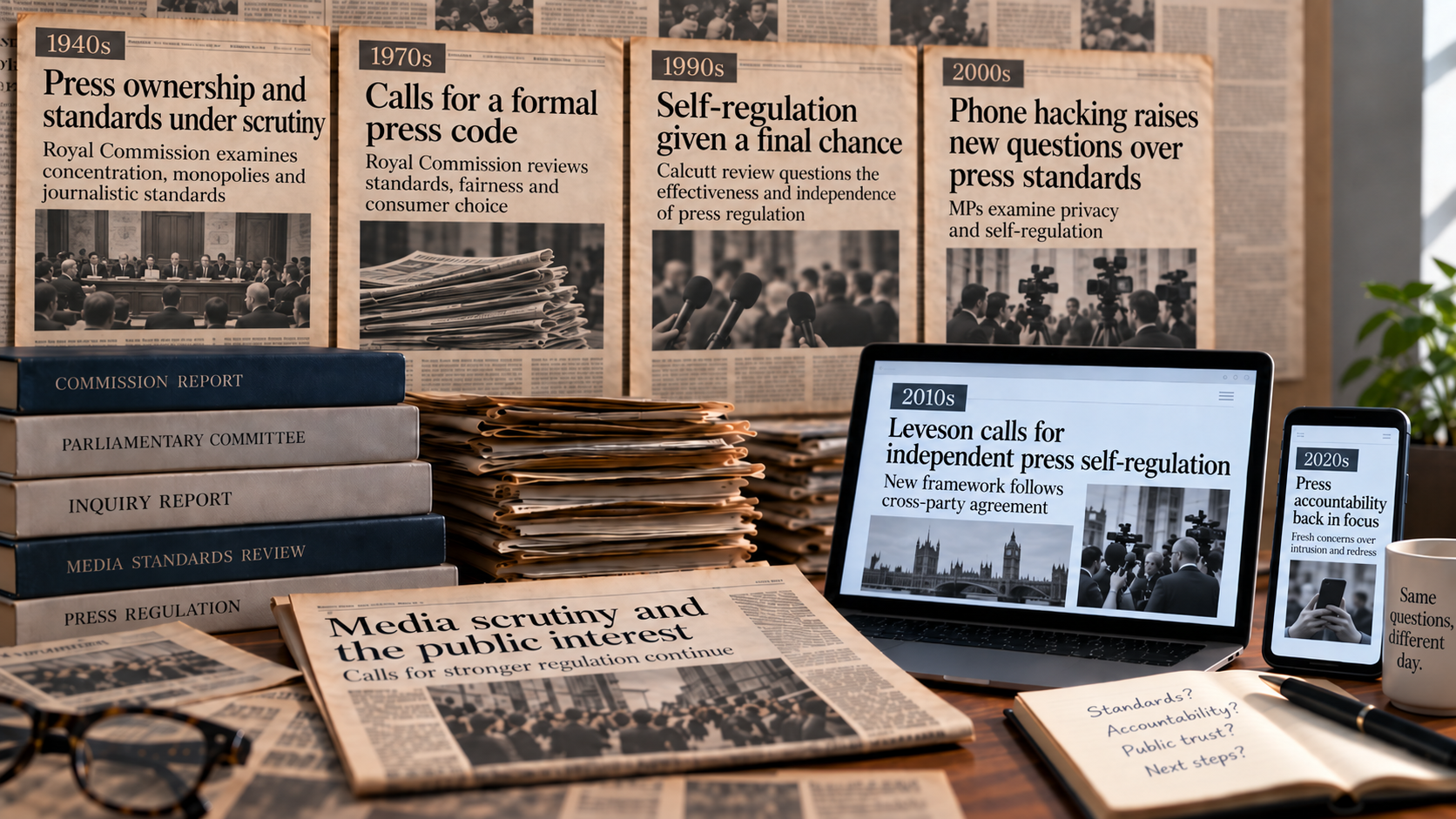
However, the larger national news titles do not want to play ball. They are full of excuses for not joining an independent press self-regulator, but that is all they are: excuses. If you scratch the surface, there is no evidence underneath. We must not forget that the Leveson Inquiry is just the latest in a string of Royal Commissions, Public Inquiries, and Parliamentary Select Committee Inquiries dating back to 1947.
Let’s not reinvent the wheel. We know what needs to be done to protect the public and uphold news publishers’ freedom of speech. We already have a model for independent press self-regulation that is ready and fit for purpose. We need a government with the moral courage to implement it fully and ensure news publishers cannot opt out.
No more excuses – it is time to do the right thing.